

12.01.2026
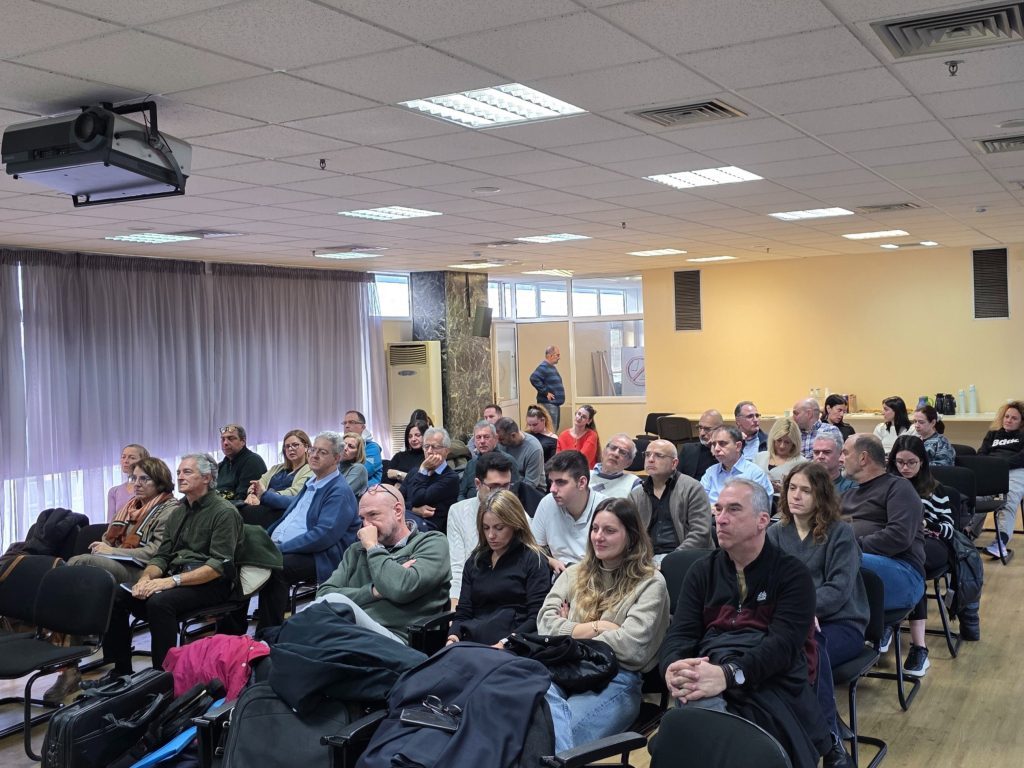
Arianna® takes centre stage in the Balkans at the Slab Track dedicated event
- Track systems
- Product

31.01.2025
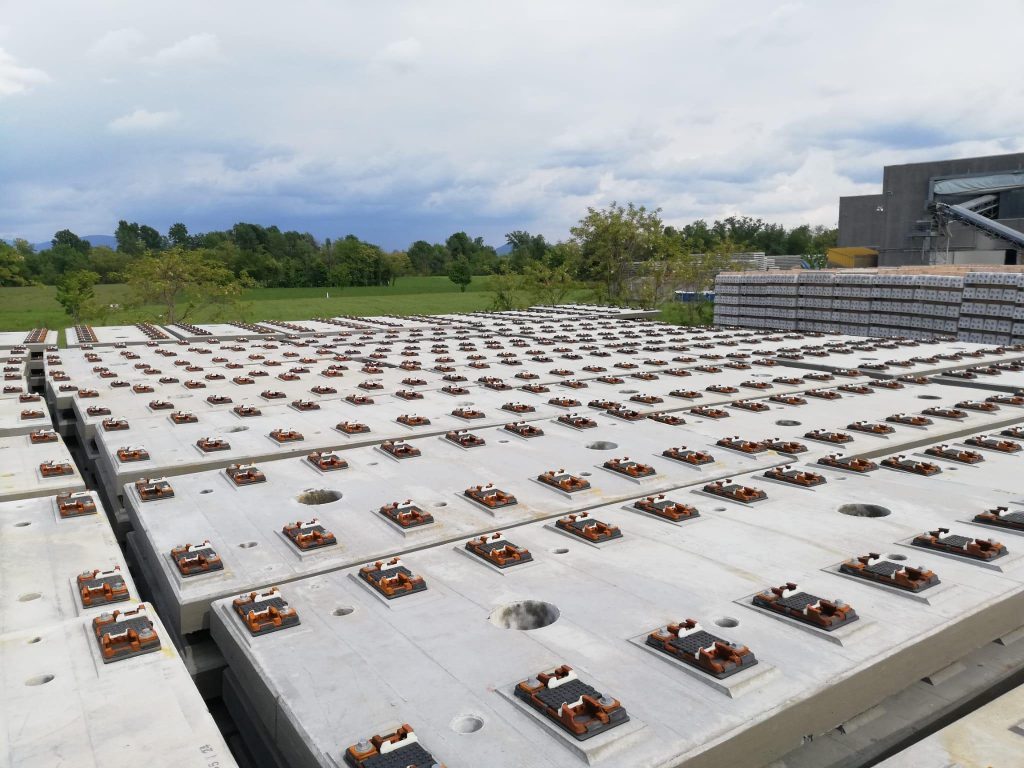
In 1983, Pietro Tognoli, founder of IPA, and Engineer Spartaco Lanni, deputy director of the FS works service, collaborated on the development of a ballastless system with pre-stressed prefabricated slabs, giving rise to the ARIANNA® concept. In 1984, IPA Division was the first company in Europe to develop and test a ballastless pre-stressed slab system, with the first experimental section on the Bergamo-Brescia line.
Following the issuance of the EN 16432 series of standards and RFI’s Technical Specifications for Supply inherent to ballastless track systems, after years of development, tests and inspections conducted with RFI inspectors, in 2024 the ARIANNA® system obtained official approval for use in Italy, confirming the excellence of the system, designed for durability and safety.
As evidence of its reduced environmental impact, ARIANNA® obtained EPD certification and Intermediate Statement of Verification for compliance with the applicable IST in 2021.
ARIANNA® is the best solution, both in terms of life cycle cost, thanks to the total absence of maintenance, and in terms of reducing CO2 emissions, with approximately 110 tonnes per kilometre of line compared to traditional track, making it an environmentally friendly and a sustainable choice.
ARIANNA® solves many critical issues related to track and track geometry: curved and canted sections are realised with prefabricated slabs that adapt to the local curve radius or the canted ramp, allowing the same fastenings to be used without the need for special components. Solutions have also been developed that allow the installation of turnouts, switches, communications or expansion joints directly on ARIANNA® slabs. In addition, the critical issue of cement-asphalt mortar has been resolved, replacing it with a patented, CE-marked, application-specific cement mortar developed by WEGH Group.
Over the years, the ARIANNA® system has proven its reliability in numerous projects, including: the Florence-Rome High Speed Line, ‘Le Ville’ location; the Sciliar Tunnel (Verona-Brennero), with more than 26,000 m of slab track; the Fiumicino Railway Station (Rome); and the Busto Arsizio Tunnel, Milan-Malpensa section.


12.01.2026
10.11.2025

22.07.2025

30.06.2025

23.05.2025
19.05.2025
30.04.2025

31.03.2025
31.01.2025

16.12.2024